
BCMC TRAINING PROGRAM

MODULE 4: Membership Recruitment and Value Communication

STUDENT INFORMATION
Student Name

PART 1: Membership Sales Objections

Read the material about Membership Recruitment. Then complete the tasks below in your own words. Be clear, thoughtful, and concise.

Activity 1: Handling Objections

Choose one objection below and write how you would respond in a calm, member-focused way.

“I don’t need to network.” “I already know everyone.” “I don’t have time to go to events.” “We have more business than we need.”
My Response:

PART 2: Recruitment and Retention

Read the material about Recruit, Retain and Reward Members. Then complete the tasks below in your own words. Be clear, thoughtful, and concise.

Activity 2: First-Year Retention

List three (3) things a chamber should do during a member’s first year to improve retention.

PART 3: Communicating Chamber Value

Read the material about Communicating Your Chamber’s Value. Then complete the tasks below in your own words. Be clear, thoughtful, and concise.

Activity 3: Perks While You Work

Write two “perks while you work” that a chamber could offer members even if they do not attend events often.

Activity 4: Benefit Statements

Write one mission benefit statement and one networking benefit statement for your chamber.

Mission Benefit Statement
Networking Benefit Statement

VOCABULARY BUILDER

Activity 5: Define the Terms

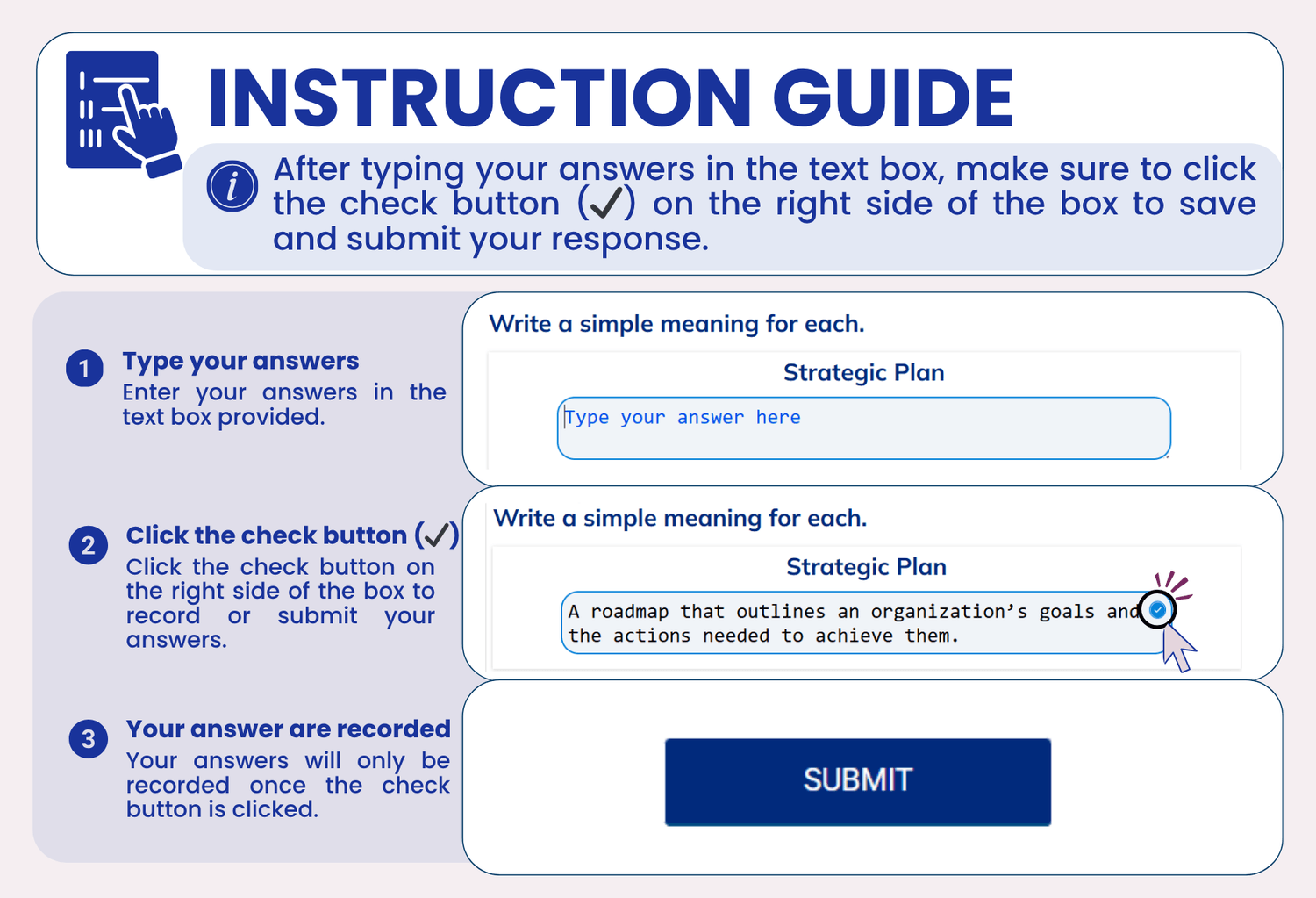
Write a simple meaning for each.

Prospect
Objection
Value Proposition
Ideal Member
Onboarding
Retention
Segment
Renewal
Ambassador
Member Value Plan
Benefit Statement
Mission Value
Networking Value
Perks While You Work

KNOWLEDGE CHECK

Activity 6: Short Answer

Write a brief answer for each.

Why do many chamber sales objections happen?
What does Frank Kenny mean by using the “power of the negative”?
Why should chambers focus on ideal members?
Why is the first year so important in retention?
Why is one overall retention rate not enough?
What kinds of activities support retention?
How can ambassadors help both recruitment and retention?
Why can event-heavy messaging create a value problem for chambers?
What is the difference between mission value and networking value?
Why are benefit statements more useful than just listing chamber features?

REFLECTION ACTIVITY

Complete the tasks below in your own words. Be clear, thoughtful, and concise.

Activity 7: Personal Reflection

Answer in your own words.

Which sales objection do you think chamber staff hear most often? Why?
Why do you think some chambers try to recruit everyone instead of ideal members?
In your opinion, what is the biggest reason first-year members do not renew?
What part of Cathi Hight’s retention framework feels most useful to you? Why?
If your chamber could improve only one thing in membership work right now, what would it be?
Does your chamber communicate more like a mission organization or more like an event organization? Explain.
What chamber value do you think is most under-communicated to members in your area?
How could your chamber better explain value to members who do not attend often?

APPLICATION EXERCISES

Complete the tasks below in your own words. Be clear, thoughtful, and concise.

Activity 8: Situational Analysis

Answer each situation clearly.

Problem 1: A prospect says, “I don’t need to network.”
Using Frank Kenny’s approach, write a response that keeps the conversation open and focused on the prospect’s needs.
Problem 2: A chamber has many new members, but most of them do not attend, do not connect, and do not renew after year one.
Using Cathi Hight’s framework, explain what the chamber should build into its first-year member process.
Problem 3: A chamber boasts an overall retention rate of 80%, but it keeps losing very small businesses and first-year members.
Why is that a warning sign, and what should the chamber do next?
Problem 4: A prospect says, “We already belong to other chambers.”
How would you respond without criticizing the other chambers?
Problem 5: A chamber has ambassadors, but they only greet at events and are rarely used for anything else.
How could the chamber expand the ambassador role to support retention?
Problem 6: A prospect says, “I don’t have time to go to events, so chamber membership probably isn’t for me.”
Using the ideas from Frank Kenny and Sherry Pasch, write a response that explains chamber value beyond attendance.
Problem 7: Your chamber’s email and social media are mostly about event invitations and ribbon-cuttings.
Using Sherry Pasch’s framework, identify three kinds of non-event value your chamber should begin communicating more clearly.

PERSONAL COMMITMENT

Complete the tasks below in your own words. Be clear, thoughtful, and concise.

Activity 9

Complete the sentence.

After finishing Module 4, I will remember that strong membership growth depends on...

QUOTE REFLECTION

Complete the tasks below in your own words. Be clear, thoughtful, and concise.

Activity 10

Choose ONE quote and explain.

Write your interpretation in 2–3 sentences.
Quote 1: “Help prospects buy, don’t ‘sell’ memberships.” – Cathi Hight Quote 2: “Every membership conversation should begin with what they need, not what you want to sell.” – Frank Kenny material Quote 3: “If members think chamber value depends only on attendance, the chamber may be communicating too narrowly.” – adapted from Sherry Pasch material

VISIT COFACC.ORG FOR MORE INFO

The Coalition of Filipino American Chambers of Commerce (COFACC) was established in 2018 to serve as a central national hub to provide collaboration, best practices, and coordination channels for the various Fil Am Chambers of Commerce nationwide.